Being ‘On the Bench’ once simply meant being a magistrate. As Micky Quinn infamously was reminded when being sent down for 21 days after being caught driving while disqualified twice in a month, magistrates have to dispense justice regardless of Pompey’s need for goals. Alan Ball, Pompey’s then manager, was in court with Quinn and instructed his prize chump Centre-Forward to plead guilty and do his time. Ball needed to know which games Quinn would miss, so he could be certain of his available squad and work out tactics accordingly until the Liverpudlian was released.
In football terms, being on the bench became a thing in England during 1965/66 when, the FA finally caught up with associations around the world, who had allowed subs since the 1950s. It took another season for the men in blazers to allow tactical substitutions. Being a substitute was not quite as good as being in the team, but at least the player selected for the role had a chance of being involved. Sitting alongside the manager in the dug-out (a phrase taken from the military world) might be an opportunity to learn more of the manager’s thoughts, maybe get in his ear about how you might improve things, or just 90 minutes hoping someone might get injured enough to leave the field, or to be so totally out of sorts that you might get to kick the ball in anger.
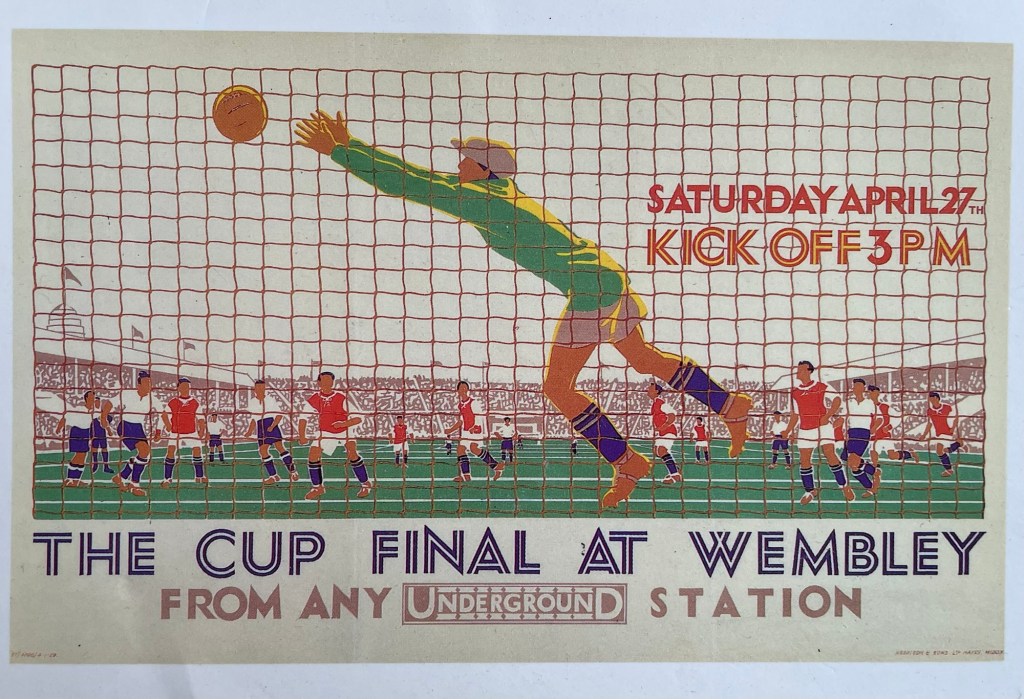
Before the 1965/66 season, a serious injury to a player could turn a game. In the 1929 FA Cup Final, Pompey missed several chances to lead before Tommy Bell was reduced to a limping passenger out on the wing. His knee injury let Bolton Wanderers into the game, which they won 2-0. Again, injuries contributed to the outcome of the 1934 FA Cup Final, when an injury to Pompey’s Jimmy Allen, who left the field, led to Manchester City equalising and then grabbing a late winner. The Football Association stuck to its ways, regardless of the impact injuries could have on its showpiece event
Colin Garwood, Pompey’s mercurial goal scorer, sold to Aldershot after financial disagreement with Chairman John Deacon, was one of the first specialist substitutes. A slight, but prolific striker, rather than a jack-of-all-trades to cover all possible options, Garwood could be used to sharpen up the team. He was a goal-scorer, pure and simple. He hated sitting watching the game and could not wait to get on the field to prove he should have been picked to start.
One sunny afternoon, at home to Port Vale, released from the confines of the touchline by manager Jimmy Dickinson, Garwood scored a spectacular goal. Collecting a loose ball in the centre circle, he lobbed the Vale keeper, Trevor Dance, from forty yards to secure a 2-0 win. He remembers that goal well, because he was so frustrated at only being picked as sub that afternoon.
Somehow, from a lone substitute, who would sprint along the touchline from time to time to save his legs from seizing up, we now have a wall of track-suited players jumping about, stretching, having a chat, lining the touchline for much of a game. The move from three substitutes to a maximum of five chosen from nine on the bench in The Championship must be challenging for the players.
The number of substitutes now allowed gives unprecedented power to the team coach and rewards the clubs with the deepest pockets, who can afford to have top players sitting most of each game out. Being able to offer just the hope of playing on Saturday, rather than the high likelihood of getting a full game, has changed the dynamic between coach and players. Now there is talk of ‘starters’ and ‘finishers’, to ensure all the players feel involved from kick-off. A finisher used to be player like Guy Whittingham who scored lots of goals, not a player who gets to play for just half an hour, or less.
Nine on the bench also places greater pressure on the coach to ‘do something, do anything’ if things aren’t quite going to plan. Spectators and owners demand more of the coach to intervene. Players are increasingly seen as being disposable during a game and the substitutes are required to increase the intensity of the team’s performance. I wonder whether this injection of higher pace and energy contributes to an increase in injuries, when players naturally tiring from being on the field from the start, come up against fresh, fired-up substitutes, not just one of them, but half the team. Have we gone from substitutes only for injuries, to injuries because of too many substitutes? One for the football statisticians to study.
~
The Number Twelve

I wandered lonely as a substitute
Waved to family in the crowd
Swapped brief banter with the fans
Joined in with clapping to warm my hands

When I see the trainer's run on
I jump up and sprint down the line
Hoping the pain is not too bad
Just enough to let me play

Monday to Friday is the hard work
Training is fun and the lads a good bunch
Lots of running and set play drills in the morning
Then off to play golf or to the pub for lunch

Being sub is better than not being involved
I’ll do what I can to impress the Gaffer
It’s the way it is, how the game’s evolved
But I want to play football, not just tread water

~
n.b. This article was first published in the Portsmouth v Ipswich Town match programme on 14th April, 2026.
Chris Perry
13/10/2025

