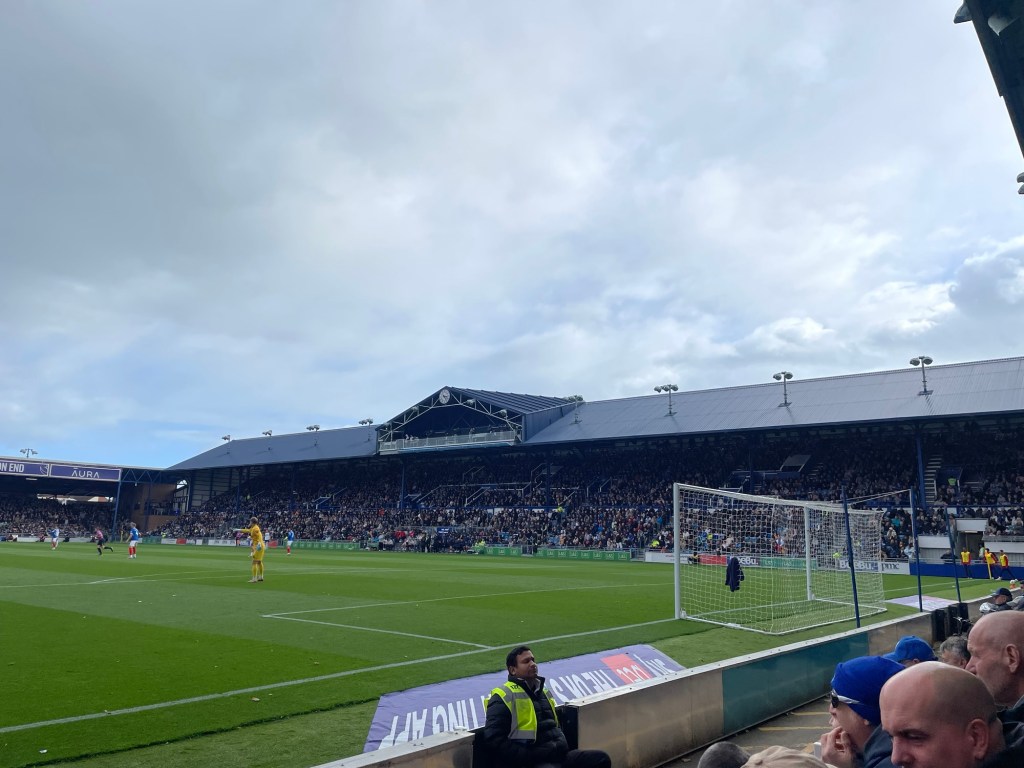
South Stand Tea Hut

Football on Boxing Day is one of the nation’s favourite fixtures.  To have a home match is particularly satisfying, but frankly, any Boxing Day match is to be savoured. 

I was once a regular on the South Terrace, Milton Enclosure, before it was re-fashioned into the seating it is today. The South Terrace was a cold, draughty, but dry place.  Close enough to the pitch to be able to smell the cut grass, the turf and players’ embrocation.  The ball would frequently end up cannoning around this patch of terrace and it would sometimes be followed by a player who had slid off the pitch, across the orange tartan track and over the retaining wall onto the concrete.  Players on the field could also clearly hear the expert tactical advice on offer from the enclosure and would sometimes respond directly verbally or more often using hand signals.

At the back of the enclosure, wedged underneath the Leitch commissioned steelwork, was a tea hut. It looked like a garden shed from B&Q and was staffed by a lady called Joyce Tynan. She worked alone, which meant that a massive queue for beverages would develop at half-time. This queue then merged with the queue for the toilets beside her hut. On more than one occasion, I found myself following the wrong painfully slow procession, when I actually wanted a tea not a pee.

Eventually, my friend, Dave and I agreed to take turns from match to match to nip along just before half-time to get our drinks order in early.  Neither of us minded taking on the task, because it was possible to still see some of the pitch from the tea hut counter. As well as being able to keep alert to the action, it meant having a chance to have a brief chat with Joyce, who was always good natured, however poorly Pompey might be playing.  Joyce had served teas at Fratton Park for many seasons and along with the senior turnstile operator, who definitely remembered Pompey’s glory years, they were two people who would always brighten any visit to PO4.

I also remember a limited option of chocolate bars at extraordinary prices being available from Joyce’s tea hut, so not many of those were bought.  I used to always check the date of these slow selling products to make sure they were at least fresh that season.

Besides the steaming urn and plastic cups of coffee, Bovril, or tea options, there was a glass cabinet for keeping pies warm.  After the match, with the hut locked up, unsold pies were left on the counter to take away for free to stop them going to waste. 

Having beaten the half-time queue, Dave or I would be back on the terrace in double-quick time, where we could gingerly sip the boiling hot drink, sometimes having a brief chat with Touchline Tony, as he took a break from stadium announcements, to dissect with us what had gone right or wrong in the first 45 minutes.

Joyce at the tea hut was a lovely woman with an impossible job.  Towards the end of her time at Fratton Park, Joyce did get an assistant, a student, who I think was simply bemused by what was expected, as waiting times did not get any shorter. Thankfully, things around Fratton Park have changed for the better.

Unlike professional rugby and non-league football, it is illegal to drink alcohol while watching a men’s professional football match, so it has been a priority for the club to ensure all catering facilities are totally out of sight of the pitch, which allows Pompey to sell alcoholic beverages throughout the match, for those who enjoy, or need, a pint at the football. 

Sadly, Joyce is no longer with us, but the club is able to offer many more part-time job opportunities on match days than was previously the case, emphasising the contribution Pompey makes to the local economy. The hospitality and catering team, led by Kayleigh Young, have a challenging job in that football stadia are only opened to fans on match days, whenever they may be, whether weeks apart, or three times in eight days. Getting the food and drink stocks for each game on such an irregular basis is a bit of a gamble, which explains in part why a limited choice of food and drink is available. It is not easy getting the stock levels right for perishable products under such circumstances. Look in the Victory Bar after a win and it will be buzzing, but after a defeat, even with a full house at the game, there can be more staff than customers, as supporters head for home. As ever, success on the pitch is a big factor in how well the club does in all aspects of the operation.

After a traditional Christmas lunch, eating is the last thing on your mind, or you may have been saving yourself to tuck into a hospitality meal at Fratton Park today. Whichever it is, I hope that Pompey and QPR can provide a cracker of a match and Pompey can put the icing on the cake with a win this Boxing Day. Happy Christmas.

n.b. A version of this article was published in the Pompey v QPR match day programme on Boxing Day, 2025.

Chris Perry

25th May 2026
 

“How to be a Footballer” by Peter Crouch

E935B2C3-88AF-4494-9E54-0EAD3F46B9DE

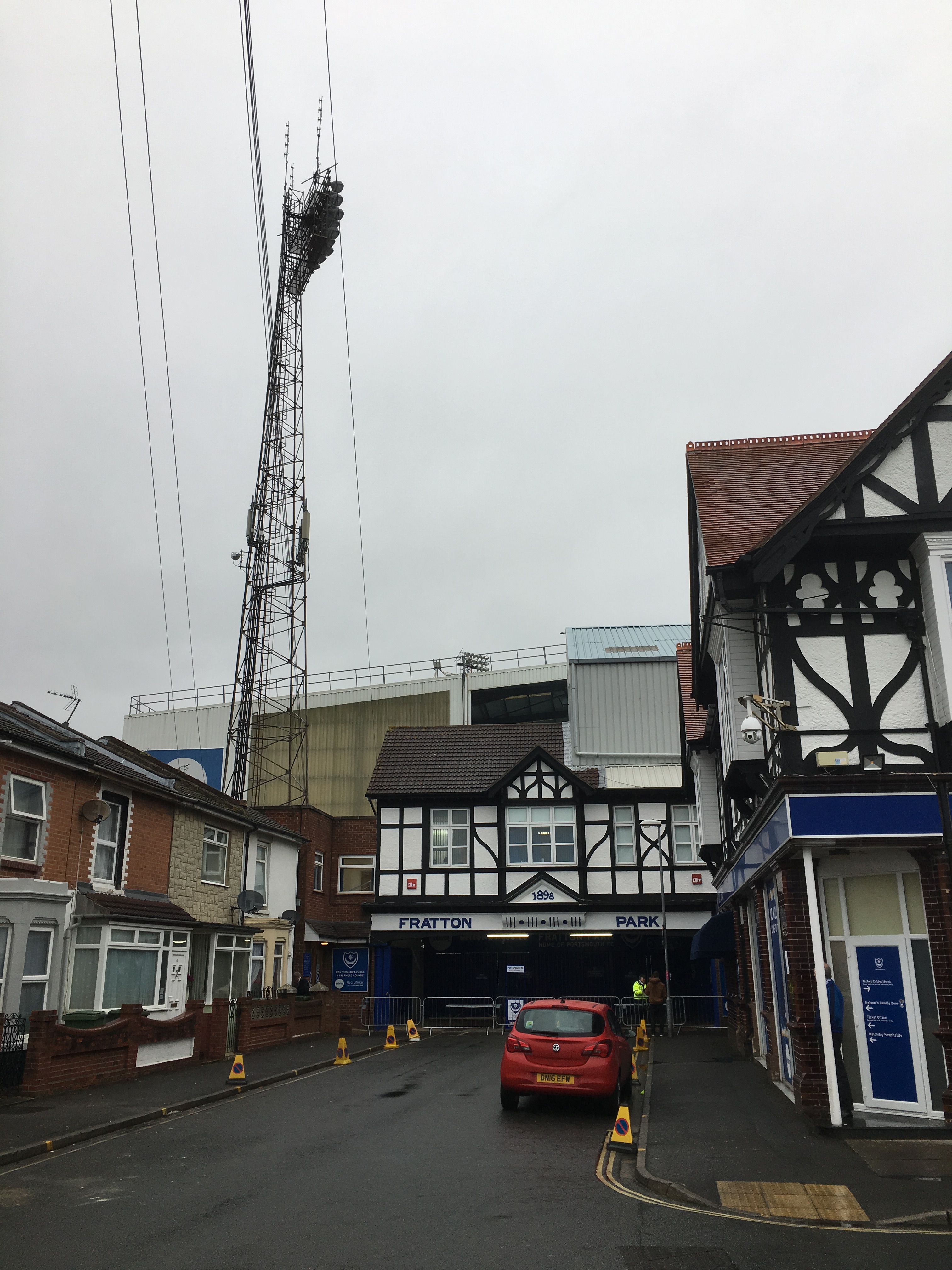
Fratton Park just two stops on the carousel of Peter Crouch’s football career.

For those of you interested in books by former employees of Pompey, this one may be worth a look. It is currently half-price in Waterstones (at at 12th September, 2018), representing a saving of £10 for a hardback copy. However, this is not a book review, just my excuse to write about Peter Crouch, a player I had great respect for during his two contracts at Pompey at Championship and Premier League levels.

Crouch was originally bought by Pompey from QPR for £1.5m in 2001. It was at QPR that he had first signed as a school boy before going to Spurs as youth player and then being sold back to QPR for £50,000.  This was the first inkling that he was a player happy to move back and forth between clubs if it meant he would get a game. He later returned to Pompey after a while at Aston Villa (sold there by Pompey for £5m in 2002); via a loan trip to Norwich; a transfer to the west Hampshire club now owned 80% by Gao Jisheng;  then Liverpool who paid £7m to sign him and then back to Fratton Park for £11m in 2008. Crouchy was then transferred for £10m to Spurs. Clearly a popular worker to have been welcomed back by so many former employers.

Is there any other top league player who has been able to dance between clubs with such agility? That he also had a spell at Chelsea as a ball boy, despite supporting QPR, suggests he gives a good interview.

My first memory of seeing Crouch playing was from 4th February 2000 in the 1-1 draw away at QPR. The young centre forward proved to be a challenge for the Pompey defence that afternoon and the QPR fans protested shrilly at the rough treatment their No 9  received  at the hands, knees and elbows of player-manager Steve Claridge’s team. Despite Crouch’s spindly frame and light-weight, there was something about the timing of his jumps and his ability to hold and lay the ball off that was impressive. He did very well in the first half and was unlucky not to score, but nodded the ball down to Paul Peschisolido for the early QPR goal. The other thing that impressed me that afternoon was that he actually finished the game, showing great determination and grit despite the battering he was getting.

In the second half, before or just after Lee Bradbury’s equaliser (I can’t remember precisely), there was a tangle of limbs and Crouch fell to the ground in a pile with Darren Moore. Both players were a little off balance, QPR fans howled for a penalty and became even more incensed as the massive frame of the centre-back Moore clambered to his feet, made a slight stumble and had to kneel on Crouch’s ribcage to return to standing. Needless to say Crouch didn’t move very far for a while.

I am pretty certain that Crouch lost his effectiveness in this game at that point, but the 19 year old soldiered on. The BBC match report mentions that Crouch was lucky not to get a red card for a late tackle towards the end of the game, likely the frustration of being bullied by Darren Moore for 90 minutes finally getting to him. However, the youngster stuck it out.

I did not previously know that Peter Crouch played for Dulwich Hamlet and IFK Hassellholm on loan when first at Spurs – at least in Sweden at 6’7″ he would have felt as if he was a normal height. Apparently he went on loan with Alton Therwell to Sweden as part of a £70,000 transfer arrangement for Jon Jonsson who was wanted by Spurs. I had never heard of Alton Therwell, nor Jon Jonsson before I researched this article, so Crouch has a head start on these two when writing a book called, “How to be a Footballer.”

Other memorable moments from the career of Peter Crouch that I recall are his scoring a last minute winning penalty against us in an outrageously badly refereed FA Cup game in west Hampshire, (when Matt Taylor was so unfairly penalised for the ball hitting the point of his shoulder); two extra time goals for Pompey in Portugal in the UEFA Cup group match to send us into the group stages and some spectacular overhead volleyed goals that demonstrated his agility and gift for scoring.  42 England caps and 22 international goals to add to 100 Premier League goals underline his credentials as a talented player. Crouchy has done well for himself and his multitudes of team-mates.

Born in January 1981 and still playing at Championship level with Stoke City in September 2018, Peter Crouch has given a good crack at a playing career. I am sure his second book will provide some unique insights to the work of a modern footballer. Peter Crouch has played at enough clubs to be able to give some sound advice about how to progress in this line of employment. HIs autobiography, “Walking Tall – My Story” was published in 2007 when he was at Liverpool. I wonder if he realised then he would still be playing 11 years later?

How to be a Footballer is published by Penguin Books

CLP  12/09/2018